Osteoarthritis (OA) is a common degenerative condition that affects millions of people worldwide. Caused by the progressive breakdown in cartilage between joints, OA gets progressively worse over time. Although there is currently no medication that can completely halt this progression, there are some treatments and lifestyle changes that can help slow this breakdown and preserve the joint space.
Different types of OA follow slightly different progression paths depending on the individual and joint affected. Although there are variations, medical practitioners generally break OA down into 4 stages, with a 5th that refers to undamaged, OA-free joints. Understanding these stages and recognising movement between them can help you monitor the effectiveness of your intervention program. It can also help with early detection, something that is crucial to preserving the joint space for as long as possible.
So, what are the four stages of osteoarthritis?
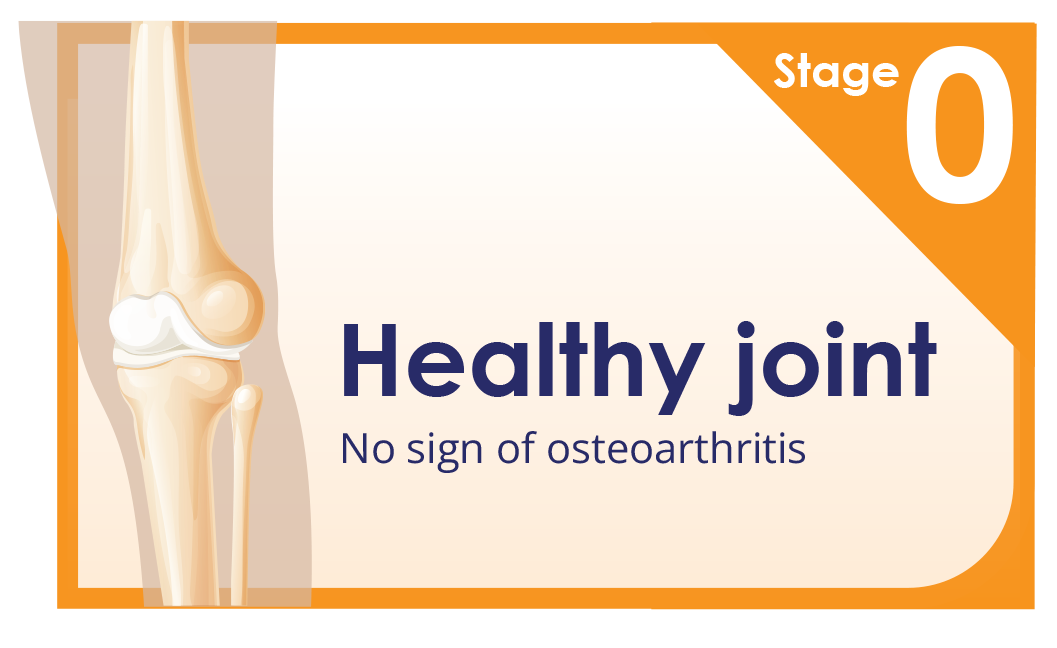
Stage zero is considered either a normal joint or the pre-osteoarthritis stage, where the joint is healthy with few signs of disease; however, there are very small changes that could lead to OA. Some may never move out of this stage, experiencing only mild wear and tear as they age, but for others this can also describe the onset of the disease, with damage starting at a cellular level without showing any clinical signs or symptoms.
At this stage, there is generally no need for treatment unless doctors begin to pick up changes on a cellular level. In these cases, doctors may prescribe over-the-counter (OTC) supplements or lifestyle changes. Making small changes like stretching before and after exercise, maintaining a healthy weight, and eating healthy foods can all help support joint health.
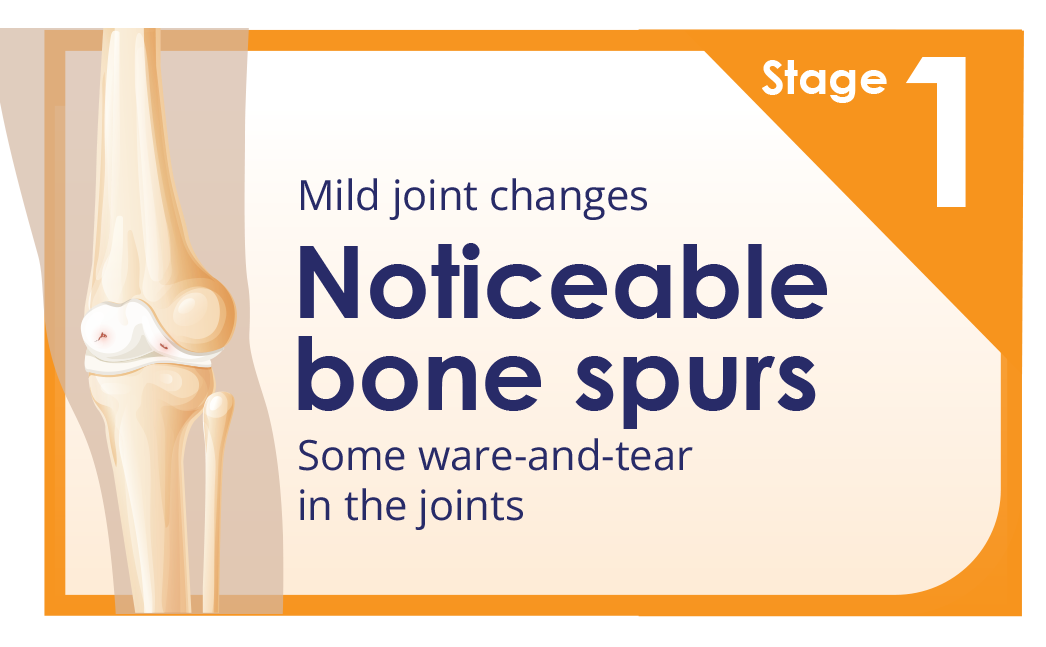
In the early stages of osteoarthritis, symptoms are often mild or non-existent. There may be slight damage to the cartilage, but most people won’t experience significant pain or discomfort. X-rays might show minor bone spurs and growths at the ends of the bones, but the joints generally still function well, and the joint space is still normal. This stage is often referred to as minor osteoarthritis.
The symptoms in stage one are still mild, being limited to slight pain and stiffness, especially after heavy exercise. Treatment generally focuses on preventative strategies, including lifestyle changes and switching to low-impact exercise.
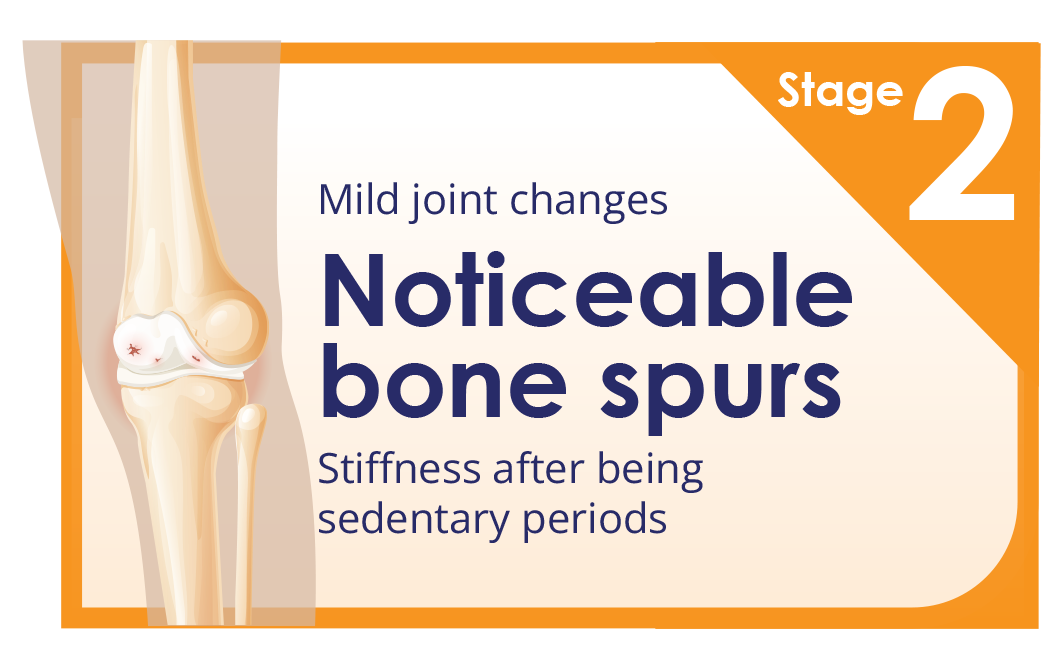
As osteoarthritis progresses to stage 2, symptoms may start to become more noticeable. At this stage, the cartilage will have deteriorated to the point where the joint space has begun to narrow slightly, often due to the overactivity of certain enzymes. During stage 2 osteoarthritis, bone spurs also continue to grow, causing more noticeable discomfort.
At this point, some people may begin to notice discomfort and pain during activity as well as after periods of increased activity. Difficulties bending and straightening joints may also become more challenging with the pain and stiffness caused by OA impairing movement. In cases of stage 2 osteoarthritis doctors may prescribe more aggressive pain relief, including nonsteroidal anti-inflammatory drugs (NSAIDs) and OTC medications like Piascledine to counter the enzyme overactivity and manage pain. Braces for joints like the knee and wrists are often also used at this point.
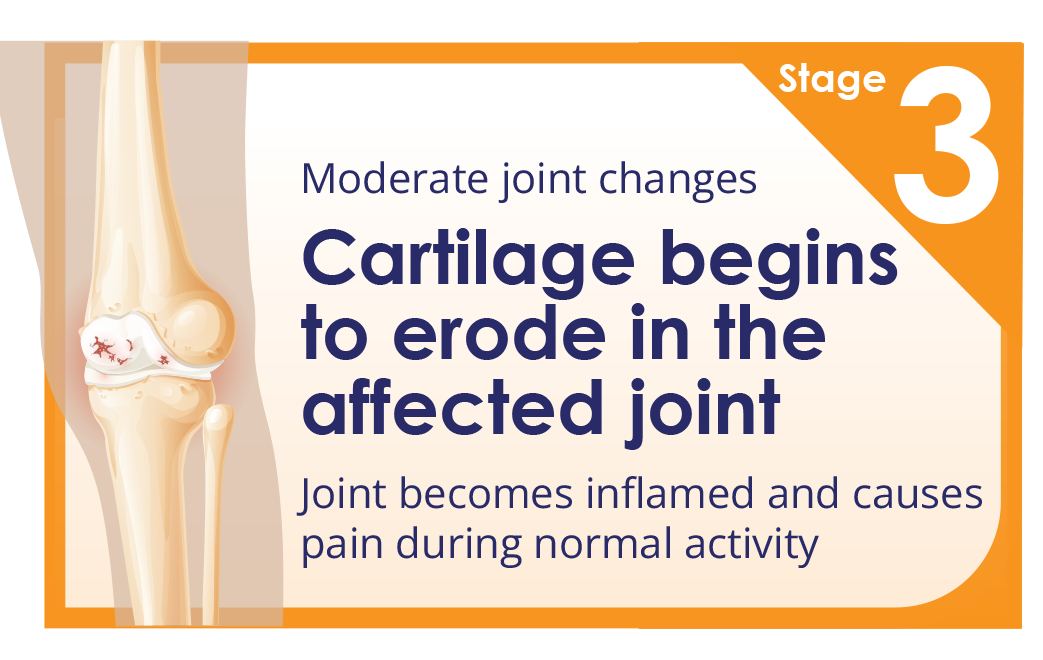
In stage 3, known as moderate osteoarthritis, the cartilage between joints shows significant wear, and the space between bones narrows further. Pain becomes more frequent and can be felt during everyday activities such as walking, bending, or climbing stairs. Some people may experience joint stiffness even when at rest, and there might be visible swelling or inflammation around the joint.
X-rays will typically show clear signs of cartilage loss and the development of larger bone spurs. At this point, managing symptoms becomes more important, and treatments such as physical therapy, pain relief medications like Piascledine, and more invasive treatments like cortisone injections may be necessary.
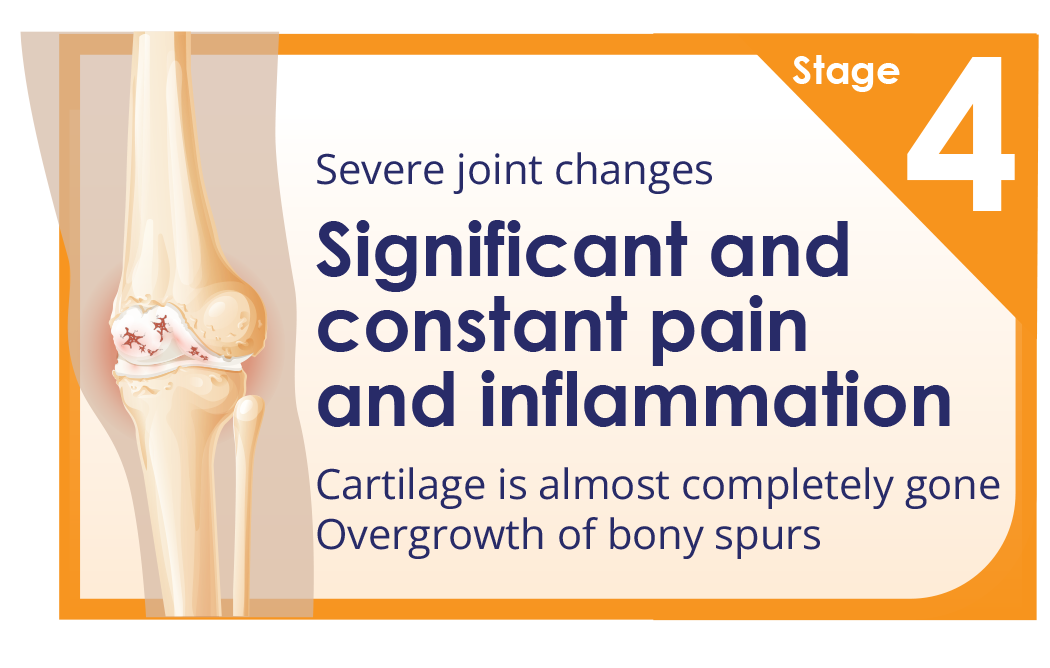
Stage 4 osteoarthritis represents the most advanced form of the disease. By this stage, the cartilage has worn away almost entirely, reducing the amount of fluid in the joint resulting in increased friction. This results in severe pain, stiffness, and a significant loss of mobility. Everyday tasks, such as getting out of bed or walking short distances, can become incredibly painful and challenging.
X-rays will show that the joint space has almost disappeared, and bone spurs are more prominent. Joint replacement surgeries may be necessary, but non-invasive treatments like Piascledine and lifestyle changes are still needed to manage symptoms.
While osteoarthritis cannot be cured, there are steps that you can take to protect your joints and slow the progression between stages. Piascledine’s unique dual mode of action is effective at any stage of OA. Unlike other treatment options, Piascledine is clinically proven to slow the progression of OA, in addition to providing pain relief.
Receiving an osteoarthritis diagnosis can be intimidating. However, knowing the stages of osteoarthritis and understanding how to slow the progression of the disease with the help of lifestyle changes and medications like Piascledine are key to maintaining your mobility for as long as possible.